
I recently joined Music City Work Club here in Nashville, and Robert Hartline invited me on for a member spotlight. It was our first real one-on-one, so we covered a lot of ground.
I Talked Keeping Score With Robert Hartline on Music City Work Club

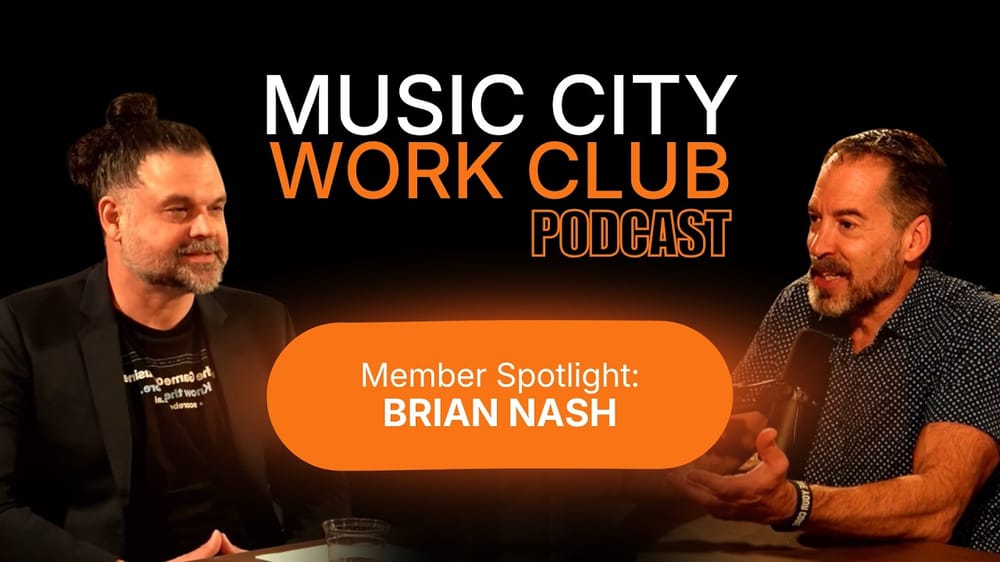
Robert Hartline had me on the Music City Work Club Member Spotlight. We went deep on my 16 years defending DUIs, why I built Scoreboardz, and how any business can find clients without chasing them.
What we talked about
- Where Scoreboardz came from. At one of my kids' soccer games the scoreboard was covered up, and nobody knew the score. It hit me that most people play the game of business blind.
- 16 years in the trenches. Why people end up calling a DUI attorney, and how for some of them, a DUI turns out to be the start of a better life.
- Niching down. One person to help, one product or service, one channel. That's how I ended up focused on DUI.
- The bond company test. I built relationships with the people who already had my audience, and within 21 days made $28,000 more.
- 260 meals. Eating at local restaurants and getting to know the owners. One of those restaurants referred a client to me. We talked for less than three minutes on the phone, then he walked into my office and signed.
- Go to the shoe store. Frankie Fihn's lesson: find people who already spend money on what you do.
- TURCA. You only have so much time, energy, resources, capacity and attention, so you have to pick.
Watch the episode
You can also read Music City Work Club's write-up of the episode on their blog.
Full transcript
This transcript was made from the episode's captions and lightly cleaned up, so a few words may be off.
Hi, Robert Hartline here with the Music City Work Club and I have a brand new member, brand new guest, new friend, Brian Nash.
Hey, what's up, Rob? Thanks for having me.
I'm glad that you're here with me. This is really the first time we've actually got some just one-on-one time.
And I like I I I love the first real one-on-one time to just kind of be on this. you know, we've had a little bit of time, but not like a lot of time to go deep in your whole story,
And what is your story?
Yeah. So, yeah, my name is Brian Nash. Um, Brian Lee Nash. I uh been an attorney for 16 years. Been in the trenches, you know, helping people fight their DUIs and criminal defense. And, um, a couple years ago, um, I was I was I had a realization as a kid. I played baseball. My my three brothers played, my dad was the coach, so like we lived and breathed baseball. And then I had two kids and so when I had kids they love soccer and so we would I would go to the soccer games and then one of the games the the scoreboard was covered up so we didn't know the score. Okay. And so as I was you know in my practice working it I realized that most people play the game of business blind and and it it kind of hit me and so I went went to my firm and I started like really looking at the numbers and trying to figure out how I can keep score. And so that was kind of the genesis of Scoreboardz, which is the other thing that I do and I'm really focused on.
Well, let's get back to the um you're you've been this attorney helping people like
I think it's what I and I just asked this question about five minutes before. It's like
why do I remember DUI Mike and because he had a lot of ads
in the bathroom stalls, right?
Bathroom stalls. Yeah. I recently just learned that that that was his his main way of advertising was in bathroom stalls.
Yeah. I mean you you know I'm I'm 10 years sober. You have seen a lot of people where alcohol has really impacted their life in a big very deep meaningful way.
100%. Yeah. I mean to the point where I quit drinking like you know I've done meditation and other things and went to Peru and did an ayahuasca journey and whatnot and um to the point where I see it just messes people's lives up. There was a great podcast with Tim Ferriss and Dr. Gabor Maté and he talks about you know traumas big T and little T traumas and people do things to feel better if you think about it everything we do is to feel better
whether it's to work make money play games you know porn whatever it's it's really to feel better and he talks about big T and little T traumas and what happens is you start try to feel better then you develop habits and those habits become addictions
and or no not addiction but you you a crutch and then they start getting you in trouble And this is what I found in my practice,
right? Is over 16 years in the trenches, people are are doing things and it's usually because of excitement or anxiety,
right? They're going out and partying. Uh they got a raise, they got a promotion, got married, bachelorette parties here, Nashville are huge. And so they go and do these, you know, things and then they end up getting in trouble. And Dr. Gabor Maté on the podcast called it stupid friends. And so once you start once you start having your friends getting you in trouble, you know, it's probably time to get rid of them. And so I see that a lot. The other side of it is if people are getting divorced, people are, you know, um lose a loved one, you know, and so they they they go out and they're trying to feel better because they feel they feel terrible and then they end up getting arrested and then they call me.
How do they get a DUI when they have Lyft and Uber? Like tell me that. Make that make sense to me.
It it doesn't make sense. I think people are really it goes back to you know whatever traumas they experience. So a lot I I help a lot of military you know members and you know professionals and so when you're dealing with stress and and trauma whether whether it was from childhood the military service or from work
right it's not like you're thinking clear in that moment anyways
and so then one one bad decision or one unhealthy decision can lead to to that when and you're not planning right nobody ever plans to get a DUI
in in the cases of DUIs that you've seen is Is it a transformative mo moment for some?
For some, yeah.
Like what of the percentage of ones that that that was the beginning of the rest of their life?
I mean, I don't have the exact, you know, number percentage, right? But I mean, I would say
25 to 35% like that. I mean, I have I have a couple friends now
where one in particular, Andy, he he literally, you know, we're friends. We hang out, you know, a couple times a year. and um he said I saved his life
because he was facing I think a second DUI or whatever and I and I and I helped him with it and he's been sober since.
So that's you know that's why I went to law school. I didn't I didn't plan on going to criminal law
but that's that's where life took me and and and to make a difference you know means a lot.
And and what was it for you that made you stop? So yeah, I I went to I mean it would became a stupid friend like you know I didn't drink all the time but I you know I would socially and whatnot and every time I did it just something I didn't feel good
and then um then I was led to Peru by hummingbirds
and and went to Peru excuse me and did a 12 12day six ceremony I was retreat
that's serious
and yeah and it it it just literally
changed the trajectory of my life. Wow.
And so and then and then I know this because we've talked before that working with Scoreboardz
really transformed the business in what way?
Yeah. So there's there's you know I realized before I built Scoreboardz, right? There was a problem that I couldn't see the scoreboard and and in law in I mean in school, right? Kinder, you know, elementary school, middle school, high school, they don't teach you how to how to do basic finances. Income minus expenses equals profit, right? They don't teach you that. And in law school, they didn't teach us how to do marketing.
And so, it took me a long time. I mean, I've been attorney 16 years. In the beginning, it was fairly easy. And as as most people know, they run a business if you've ever run ads. But generally, the cost, the CAC, the cost to acquire a customer goes up. And so, I experienced that firsthand in the beginning when I was first an attorney, right? It it was, you know, pay for this and you get clients. Well, that cost kept going keeps going up. And so, um, after 16, you know, 14 years or so, I started really like trying to figure out, you know, how to grow a law firm. And, and I realized that I didn't have a scoreboard to look at the critical numbers, right? It's it's actually more simple to make money than than most people make it, right? Um, and and I figured out a framework of it's one one. Alex Hormozi popularizes,
but you pick one person to help, one product or service. That's how I was niched down to DUIs just like DUI Mike. And so I was like, I'll fill that gap, DUI Nash. And then you find one channel to acquire the clients to find them. And then you do that till you make a million dollars a year,
right? And so that's anybody can use that framework. And so that's kind of where I started with thinking about it. And then after I implemented that, I realized like I had to call my my assistant sales, my intake guy to to know my numbers because I'm driving around to courts, you know, and and in court driving, etc., not always in front of my computer. So, I just kind of worked through thinking about how I could make this a solution for myself.
And then and then I and then I implemented it. I built Scoreboardz, the the the scoreboard, that's with a Z, by the way. Um, and I built that and and it really when I'm sitting at my computer, it's a floating toolbar, so it stays above everything else. So, it reminds me of the the one thing I'm supposed to do.
And and I think if I just back up a little bit, I've been meditating for three years every day. Have missed a day over three and a half years.
I've done a today's [1,000-plus] day of a Spanish lesson on Duolingo.
That is so wild. Did you start doing uh Duolingo when you started not drinking?
No, that that was 2022. I stopped drinking. But the reason I I uh started doing Duolingo is because my ex-wife is Venezuelan. So, and my kids are half Venezuelan. So, I I understand Spanish a lot.
I've had a lot of, you know, Spanish speaking clients and but I was in Mexico 2 years ago for 26 days in a little colonial like super small town for 26 days and nobody spoke English.
Wow. So I realized, you know, because I've been meditating for a while that the the secret is really simple. It's like if you just do the thing every day, right, you will eventually accomplish whatever you want to accomplish. And so through meditation in Spanish, I realized I was missing I was missing the the business. How do you attract help people
to do that? And so that's that was kind of the genesis of Scoreboardz.
And so how has that influenced your business? Well, it changed it significantly. So the first test that I ran, I implemented the the 1-1-1-1 framework. I niched down. So I won product or services and I thought through, you know, it's DUI and criminal, but that was that was the niche. And you have, you know, it really helps to do that. And so then I thought the next the next question I had to answer is where are these people hanging out? Like where can I where can I go find these? because the the rules of of attorneys, you can't solicit, you know, clients to get paid,
So, I thought, well, there's bond companies. And so, I already knew I had a friend that was a bond company, and there's rules around that. So, I made sure I stating the rules, but I it's not it's not going and asking them for something. And it's saying, "Hey, build a relationship with with the people that have your audience and then provide them figure out how to solve their problem and they'll naturally reciprocate." And so I started it and within 21 days made $28,000 more.
Let's go.
So it works. So that was that was the home run. So I came up with this, you know, Scoreboardz and then cash, you know, it's for attorneys, but it's client acquisition system for home runs. Yeah. So, it's really focused on how can you, you know, figure out the 1-1-1-1 where they're hanging out and then be of service. Like that's the big component.
Well, I mean, you're, you know, Scoreboardz um is a physical thing in every stadium, any game, there is a board that has a number on it. And the the board is there for the audience. keeps them excited, keep them interesting,
and it's there for the players because if if if the scoreboard is not there, then there's no game. You don't know what the score is. It like literally makes a game totally worthless.
Exactly. and you would probably end up talking and be on your phone the whole time because there's nothing nothing exciting if you don't know how much time is left, who's going to win, who's who's going to lose, like um and then for the players perspective, it's even worse
because you you don't know how much energy to put on that field because you have x amount of energy to play a game,
right? And that's the same thing true with your business because I do believe that business is is game and I think we fear that and it is not any fun then why do you want to play it?
Why do it?
And um I remember years ago um I was like I got obsessed with a number
you know what what I wanted the company to do. I wanted to like do 10 million. I was like 10 million 10 million 10 million. I said all year like and I got it. You know, it's like you focus on it and it will just arrive. And what what I like what you're talking about what you do in your tool because your tool is on the screen.
On the screen
and they're looking at the screen. This is a thing they use
throughout the day, right?
Yes.
Yes. So through talking I So I I built a tool just to Scoreboardz, right? And I built that was using it in my firm and I started talking to I tal I was talking to everybody. I was talking to anybody that had a business.
Yeah. And then I, you know, I I heard the Y Combinator, YC, you know, they they want somebody if they invest in them and want to work with them, they want them to have dealt with the the pain for 5 to 10 years. And I'm like, well, I've dealt with it for 16.
So, that's that was a decival moment. I I I was like, hey, I already know I know what attorneys go through. So, I I focused on that. And it definitely changed my practice. And through talking to attorneys about just the tool, right, which is is a game changer literally itself, I realized they didn't have the playing field.
And the playing field is a sales pipeline,
right? They have a lot of attorneys have software, right, to manage their clients, but they don't treat the game as actual game and have have the the scoreboard, the field, and then when I talk to them more, they don't have the playbooks, right? Back to the education and law school. They're not taught how to get clients. So, what do they default to? They see an ad, they talk to a marketer, an agency, and agencies, say, "Hey, pay 2500 to $15,000 because you're an attorney. You make a lot of money. So, sign up for my service. I'm selling you a hammer when you actually need a drill,
right?" And there and so attorneys, uh, I think one of the other biggest factors on on psychology and habit building is thinking that you don't have the agency or the power to do something yourself. You kind of push the decision off to the agency and then you're disappointed. So my my buddy Frankie Fihn says that agencies churn 90 90 90 to 120 days. That's they have a high churn rate,
right? And so so I've focused on attorneys and and I've I've built the scoreboard and I offer attorneys the playing field, the sales pipeline and also the playbooks on how to take control and control your actual acquisition and get clients that you actually want.
Have you thought about it? What's your So what's your flow going to look like? Have you you've launched?
I've launched. Yeah, we just just recently launched it. Monday Monday at Entrepreneur Center. Yeah.
Oh, wow. Very cool. That's exciting. And so, uh, what does it look like for an attorney to discover Scoreboardz and and go through the process of onboarding? What does that look like?
Yeah. So, so if we could just zoom out a little bit, I realized business is an infinite game, right? There's there's
there's never an end.
There's never an end until you sell or retire, right? Wind it down. And so, I thought through it and I and and again, Hormozi, I've learned so much from that guy. He's he's phenomenal. But he he he suggests in a lot of situations to have like a challenge or 12-week program. So I realized that not every attorney, right? I focus on so solo and small firms, you know, solos to up to 10 that not every attorney is in the same spot. And so I I just created seasons and I have the first eight, you know, scheduled out and and built. But the foundation, they get the scoreboard, they get the the field, and they get the fast cash playbook. M.
And so then they if if they if they're starting like I have a meeting this week with an attorney and she's 5 months in. So she's perfect for the foundation level.
Right. And if they're not ready for that then I have I have a a 21-day work challenge workshop that I'm I'm doing. But so depending on where they are is where they start in the seasons. And so it's an infinite game. Um and you know as you know you know done a lot of business
once you solve one problem another problem and opportunity appears. It's inevitable.
It's and that's the game. That's what makes it fun and challenging, right? Just like any game that you can play. Baseball, soccer, chess, you know, any of those, right? It's there's a challenge and you and as you unlock a level, you think you figured it out, right? There's a there's somebody else that can come along and and give you a run for your money and then you learn from them and you keep growing.
So, how long do you think it's going to take for you to make the full leap and only do Scoreboardz or do you want to do both?
No, don't want to do both. Both. And you know, I have a mentor. He's like, why don't you do both? You can have Well, I I firmly believe in in, you know, doing focusing 100% on one thing.
Um I'm doing both and it's it's a lot.
It's a lot. And um but it's definitely I definitely want to transition to full-time Scoreboardz and and the plan is to, you know, acquire C, you know, clients for Scoreboardz andor raise money to to um to go full-time on Scoreboardz.
Yeah. Yeah. What what would be your vision for the company? Well, it's funny you said 10 million because that's that's the that's the goal is to hit 10 million annual recurring revenue.
Dude, you said the number that I was I was I was smiling. I was like, "Yep, that's Let's go. What do you What do you think you What was How long do you think it would take?"
Uh, three years.
Three years. I like this. I like this. It's very science of scaling kind of thinking.
It's It's predictable. That's the whole I mean, it's it's it's actually I I I had a coach Vincent Buglei. Awesome guys. got a new YouTube channel. Um, and he he's a sports he was a sports photographer, but um, you know, he he taught me a lot of this framework also of like the cold out bond. He's he's a natural at talking to people.
He's like reach out to 10 people,
you know, every day,
etc., etc. And so that that was really, you know, learning from different people and whatnot and then and then working backwards and and really having a predictable way to to get clients. Um, when I was coming up with this idea, I realized he had a key at the time, he had a community that taught people how to do build communities.
I realized that the best channels on social media, if you're on YouTube, if you make a channel on how to do good on YouTube, on YouTube, you're going to do better. And so, that was there was a few things that I really wanted with something that I built because I'm stuck in court. I have to go to court. And so, I wanted the freedom to not go to court and work from anywhere in the world. I wanted a recurring revenue model really help people have recurring revenue and then also I wanted to be able to like like the community build communities the tool is literally what I'm teaching them. So like I'm doing the same thing every day and what I'm doing I'm showing other people how to do it in their niche.
Yeah. Yeah. Yeah. I mean it sounds like man you sound like a coach man.
Sounds like you've been coached. So tell me what was it like before you had gotten coaching to having had coaching? What made you make a decision? Who was Brian before being coached and then the entrepreneur after being coached?
Yeah. So Brian before, you know, was confused and lost, right? And I'm an idea guy
and so I I'll I'd come up with an idea and and then I'd see another idea. So I start that.
You mean an entrepreneur chasing squirrels? I've never heard of [laughter] that,
So weird. That would be that'd be awfully difficult to stay focused.
Yes. 100. It's super. Yeah. So [laughter] you can relate, I think. Yeah. So yeah.
So and and Yeah. And so then then I came up with a framework, right, through the coaching, you know, and I've always kind of gravitated towards people that are know more than me like in in learning. I love learning. And so I've always kind of gravitated read books and you know when I was a kid, you know, all kinds of books. And so then I realized that I need to find somebody that's already done what I want to do and then I can shortcut that path
by investing some money.
Right. And then I then through the coaching whatnot, I came up with my own framework called TURCA. And I realized there's only so much time, energy, resources, capacity, and attention. And when I started committing and you know having more integrity with myself and saying I'm going to meditate and I do it every day no matter what right I'm going to learn Spanish I do it you realize and you start scheduling your day you c you can't do everything that you want to do
you can't do it and so that's that so that that's that really that understanding for myself has helped me figure out okay I can only do this I can only do this and so It it it it really through the coaching, the you know therapy and you know trip to Peru and other things that I've done and with those those modals modalities like it really helped me go okay it was really like like um a clay artist or statues right it's what you take away that had that's that's really the lesson from all the coaching was like what can we take away become the best at
yeah strip away the what's not you to Yeah. Well, it makes me it makes me wonder about how you sound like you have a lot of um structure framework
that allow you to operate maybe maybe you call it Brian's operating system, you know?
Um how do you go about your decision making?
Well, I think the best way to do it is figure out what you want,
right? Like I you know, you gave a good example. I want $10 million a year. maybe add on there
what profit margin you want, right? But it's really
way wasn't a lot, [laughter]
but that's a good thing to do, right? Because um but my how I decide is like it's like I really think about what I want. I think that's a great model, you know? It's like that's a great starting point, right? And then and then not thinking about the limitations or whatever. It's like what do I want? And you know, that's like that's how I came up with Scoreboardz and and and building that versus the 20 other opportunities that I could possibly have. you know, and then and then you say, "I want this. I'm here. What's it going to take to get to that point, and who can I find that's already done it to get me there?"
So, you came to Founder in a Day. It was good to have you there. It
was awesome.
What What you What did you think of that day together?
Phenomenal. Like, I I highly recommend people come people come to
come here. Yeah. Music City Work Club. So, very very fascinating. And just like I love you guys, you know, I love hearing what people say and then even better, I love seeing what they do.
So just watching you how you run this place
and then seeing Rudy who invited me,
you know, he's doing the Scoreboardz framework. There's only four ways to get clients, customers, cold outreach, warm outreach, content, ads, again Hormozi's framework.
And Rudy sent me a LinkedIn message.
And he sent me a LinkedIn message, invited me to the mastermind.
Yeah. And when I got here, I met you, met everybody, and I realized everybody in the room had the problem that Scoreboardz solved.
And I was just helping.
And not selling.
Yeah. Yeah.
And and I and that's one of the biggest, I think, secrets through coaching and stuff. It's like if you can just help, right? You lend a hand.
That's really how you start a business is figure out the 1-1-1-1, lend a hand. So Rudy was doing the the one of the Scoreboardz core frameworks, right? From hos and he came here. So the mastermind was phenomenal. Then I don't know if I joined. Yeah, I think I joined in between and then came the founder in a day. Got to present
you know what I'm working on and uh great program. I highly recommend any everybody come here and check it out.
Oh, that's amazing. So um what is do you have a time frame that three years to get to 10 million?
Is there a time in which you let go of the the DUI business? Yeah. As soon as as soon as the revenue from Scoreboardz gets to a level that replaces that income, I'm out.
I'm either going to sell it or or wind it down.
Um and and the second possibility is I'm exploring. I'm going to apply to YC. Really hard to get in, but if they're watching,
uh I'm very interested. And um so first first step is, you know, get the revenue to replace the law income. And that's a better position to raise money anyways. You know, apply. I'm applying to YC. I'm going to apply to Invest Tennessee. you know, they have a match program. So, finding private investors. So,
well, you know, if you know to add, I mean, what you provide,
and I know you're really targeting to uh attorneys, but every single business
has a scorecard. And if you don't, you don't have a business that's growing at any level of anything. Um, I've never seen a business that is scaling without either a whiteboard with a bunch of numbers written in hand
or someone obsessed with
a spreadsheet.
And I remember in my wireless business, I mean, every single store had an updated how many phone activations, how many accessories, how many upgrades, how many
repairs did they do? and and it just it it worked. Um, so it's really wild that you're you're smart enough to realize though to also be so laser focused on one niche because most people don't do that,
Because you could easily say I could help everybody.
Yeah. Because I because my initial target was um, you know, when I was doing exploring was um, ad agencies.
Right. Right.
So didn't know any. So it's like hard to have those conversations.
Yeah. I I mean I would literally
if a someone that owned a cell phone store called me on the phone and they had something to sell, I would take their call. Like I it's probably way easier to do a cold reach to someone that's already in your niche than
than You're exactly right.
Then my my second area I explored was sales teams.
Yeah. [snorts]
I haven't ran sales teams of 10 to 50 people.
It's hard to talk that language for you then.
Exactly. So that's so it was just n that that that that focus. It just made sense and I know as I grow and I was able to attract talent because right that's the lifeblood of a business is cash flow once once you hit a certain level then you can attract better talent then I can bring on you know talent coaches advisors mentors and then we then we can we can pick the next niche
here's a here's a question
let's pretend for a moment I am an attorney and let's say I'm two years in and I don't think a I don't think a lot of people that don't know a lot about attorneys don't realize It's a sales job in the beginning. It's not really uh doing a a lot of law. It's doing a lot of getting getting some business.
And if I'm struggling, talk to me like you would talk to a struggling attorney and just talk about your product because I think this would be a great thing for someone to maybe out in this world that
could use your assistance.
Yeah. So, um, I realized that, you know, being an attorney, you think it's doing the law. It's really marketing and sales and recruiting.
So, I knew if I I know if I stayed in in law, I'd have to improve my skill set, which is not my natural skill set of recruiting.
So, that's first is like make sure that you're doing, you know, how to do marketing, sales, and recruiting. That's what that's what the law business is. You delivering the services is the easy part. Um, so yeah. So, so if you if you're an attorney, right? I'm I'm just want to have a conversation about what's your biggest bottleneck like what are you what are you struggling with the most
and and then once I hear that then I can give them free advice on hey this is what I would do
right um for I mean it and and again I just look for any way to help them
and then if it happens to line up with Scoreboardz then we have a number number of doors they can come in.
Yeah. And so, for example, I was talking to I mean, a real example, an attorney's been, you know, practicing for 5 months. And and one of the things I don't know if people know this, but when you start out as an attorney, if you're going to do criminal defense or you want to make money, you can go to the court, sign up for court appointments, and make 60 bucks an hour,
right? And so, you have work, but then you have to track your hourly rate, and then you have to build estate. And so that's a great way to like bring in income while you're while you're implementing something like this. So I always I would I would say hey look the first place to start you know is decide what you want and then do you have any money to invest or not
because you can short circuit that path if you have a little bit of money or credit card. Now, I don't recommend running ads right off the bat, right? I would say you you need to tap into your warm network first, right? And then you start going cold, but instead of going to, you know, trying to target clients and soliciting clients in the courthouse, which is against the rules from what I understand, they can approach you, but you can't approach them. I would say I came up with this exper I did this experiment, right? This is I I love experiments, but I call it 260 meals to a million dollars a year business. I have a friend Jason and he has a 100 cups, which is he he realized that if he just goes and has a 100 cups of coffee with people, right, and help and and be a friend and talk to people and try to help them because we think helping is going and digging a ditch or doing something. But you really can help people by just talking to them and being a friend. And then when they have something that they need help with, you can connect them to somebody and they're going to think of you, right? So I would say start with people you know and just have conversations and say, "Hey, I'm open for business. I do this thing and become known for that thing." Then you expand it out. I just had a restaurant. So my experiment with 260 meals to the million dollar business. So I have a book that's at some point will come out was I I started just going and having meals at restaurants
by myself. You know, there's a book, great book, Never Eat Alone. I'm like, well, scheduling lunches is not my strength. So, I would just start going to the restaurants and talking to the servers and and and um and and then the restaurant owners, managers.
And I did that for a while and I and I posted about them and promoted their business. And I literally, believe it or not, had a client walk into my office this morning. It was the shortest close I've ever had. I talked to him less than three minutes on the phone. He walked into my office, has a DUI. He signed the contract, set $5,000 on my desk, and he walked out. You know where that came from? That restaurant.
She She referred me.
Wow.
That I talked to, you know, I haven't, you know, 6 months a year a year ago. So like that is how that's what I mean by taking control. You don't like instead of just thinking I see an ad for an ad agency or you know I need to spend money on a hammer because
but I'm not in the market for a hammer you know or I need a hole not a hammer.
It's you they need clients. They don't need this tool this service to do it. There's things that you can do. Any business can do this. And again, Frankie Fihn, uh, buddy of mine, he's he's on YouTube, but he he, uh, teaches go to the shoe store. And, and I guess it was a Dan Kennedy framework, and he and he says, "Most people when they start business, they look for people with no shoes to sell them shoes because they really need them." He goes, "You want to find people that already spend money."
Yeah. And so when you're starting out, let people know about you and then in and because your time and energy and resources are limited, go to the where the shoe stores where people are already at. bond companies, restaurants, etc.
Dude, you're a coach.
You're totally a coach, by the way. I mean, what you're you're selling hope.
Because a lot of these people that are starting their businesses um get in their own way and you're offering them a bit of hope and then, you know, honestly with the the scorecard, it's just like a plus. But dude, it's it's you.
Yeah,
it's you. Thanks for so much.
No, thanks for having appreciate you. So listen, if you are an entrepreneur here in Nashville, Tennessee, there is a place where you can go not only work, meet other people, Sonic Plunge, the works, but be in a community of other driven people doing cool things like Scoreboardz here with Brian Nash. Um, where can they find you?
So anywhere online, Brian Lee Nash, Brian Lee Nash, or um, any social media or Scoreboardz with a Z, .ai.
Beautiful. And if you want to learn more about Music City Work Club, you can visit musiccityworkclub.com. Thanks for watching and I'll see you next week.